Next Fit Allocation Algorithm
Next Fit Allocation Algorithm
Next Fit Allocation is a memory management algorithm where memory is allocated to a process in the next available block that is large enough to accommodate it. The search for available memory starts from the location where the previous allocation took place and continues in a sequential manner.
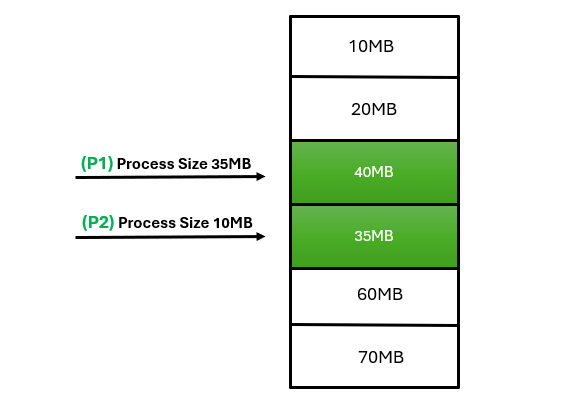
| Process No. | Process Size | Block No. |
|---|
Frequently Ask Question
What is the Next Fit algorithm?
Think of it as a memory organizer for your computer. It’s like a librarian who finds just the right shelf space for each book, but with a twist: they always start searching from the last spot they left off, rather than going back to the beginning every time. This makes it a bit quicker on the job.
How does Next Fit differ from other allocation algorithms?
Unlike First Fit, which starts searching for memory from the beginning every time, Next Fit resumes its search from the last allocated block. This minimizes fragmentation, making it more efficient for certain types of workloads.
Why is it called “Next Fit”?
The algorithm earns its name because it allocates the next available memory block that satisfies the process’s requirements. It simplifies the allocation process by not considering other available blocks until the next allocation request.
What is the advantage of using Next Fit?
Next Fit is advantageous in scenarios where processes have varying memory demands over time. Its sequential approach minimizes external fragmentation and can be more efficient than First Fit in certain cases.
How does Next Fit handle fragmentation?
Next Fit minimizes fragmentation by allocating memory sequentially. While it may leave small gaps between allocated blocks, it helps prevent the creation of scattered free memory spaces, reducing wasted memory.
Is Next Fit always the best choice?
No, the effectiveness of Next Fit depends on the specific characteristics of the workload. In situations where processes have similar memory requirements, Next Fit may not outperform other algorithms like Best Fit or Worst Fit.
Does Next Fit have any drawbacks?
Yes, one limitation of Next Fit is its potential to leave small gaps between allocated blocks, leading to internal fragmentation. In scenarios where memory demands are highly variable, other algorithms may offer better performance.
When should I consider using Next Fit?
Next Fit is a good choice when dealing with dynamic workloads where processes have varying memory needs. It can simplify memory management and reduce fragmentation in scenarios where processes are of different sizes.
How can I implement Next Fit in my system?
Implementing Next Fit involves maintaining a pointer to the last allocated block and searching for the next available block sequentially. This pointer is updated with each allocation. Specific implementation details may vary based on the programming language and system architecture.
Are there alternative algorithms to Next Fit?
Yes, other memory allocation algorithms include First Fit, Best Fit, and Worst Fit. The choice of the algorithm depends on the nature of the applications running on the system and the system’s memory management goals.